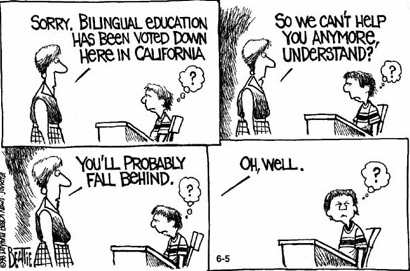
Bilingual education has always been criticized over the years and continues to be a controversial topic within the field of Education. There are its advocates on one side and those who believe in submersion on the opposing side. When the subject is discussed, often times, we forget how long bilingual education has actually been around. Especially in the state of Texas, bilingualism dates back to the early settlement of the state. As chapter 2 of “The Strange Career of Bilingual Education in Texas” by Carlos Kevin Blanton described, Tejanos, Germans, and Czechs all took part of the molding of bilingualism from 1850-1900. Texas has always had ethnic communities as a result of being a border state so close to other countries and regions rich in diversity. However, Mexican Americans were “one of the most significant non-English-speaking groups in Texas education during the nineteenth century” according to Blanton, and at the turn of the century there was a mass migration of Mexicans arriving in the state that more than tripled the 1887 population of native-born Tejanos and Mexican immigrants by 1910. Even at this point in education, public schooling for Mexican Americans was sparse and often times the only bilingual programs were offered in private schools, many of which were parochial. Many of them even fostered non-English schooling and tried resisting the growth of Anglo culture dominance. Eventually even Texas realized the need for bilingual teachers and programs was essential for public education. However, as the years have passed by and education laws have come about, this same attitude still remains in certain areas within the state. While bilingual programs have been created in districts where high bilingualism exists and definitely flourished in some areas, there are still those that would argue against the need for such programs and whether bilingual, ESL, dual, or submersion programs are the best way to educate a growing diverse and bilingual population.
As future educators, I believe we must be knowledgeable of the history of Bilingualism in Texas and the United States as well as aware of the varying attitudes towards bilingual education and programs alike.
Resources:
Blanton, Carlos K.(2007). The Strange Career of Bilingual Education in Texas. United States.

No comments:
Post a Comment